Join the conference “Youth in Urban Space – Developments pre and post Corona, how municipalities and youth work could deal with them” on the 23th of January in Vienna (Austria) organised by Verein Wiener Jugendzentren.
This conference will present and discuss the results of this partnership among four major European cities on young people and youth work in public urban space, carried out by practitioners with researchers’ support. The conference will include policy and practise recommendations.
Several dozen youth workers researched during almost two years questions of public space in big cities concerning its usability for youth. Furthermore, they researched how this has changed over time, and how those four cities could adapt open youth work. The University for Continuing Education in Krems, Austria, was a leading research partner. Of course, this project also dealt with the effects of the Covid 19 pandemic, even though it had originally been planned before that.
The researchers used both quantitative and qualitative methods and interviewed more than 2000 youth and more than 400 youth workers. Some of the methods they used were 24 one-week observation visits to gain intense insights and focus group interviews with both young people and youth workers, among others. They analysed data on both the regional and international level. Besides a study, the project will also deliver city specific brochures in the respective countries’ languages, and is producing short videos by and with youth.
The application deadline is 9 December.
You can find more info and how to apply here.
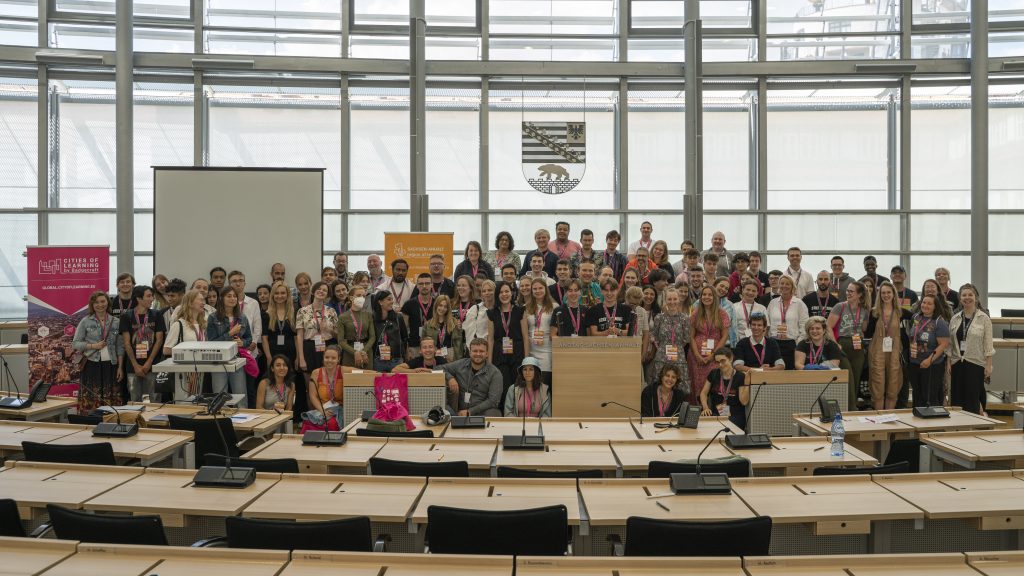
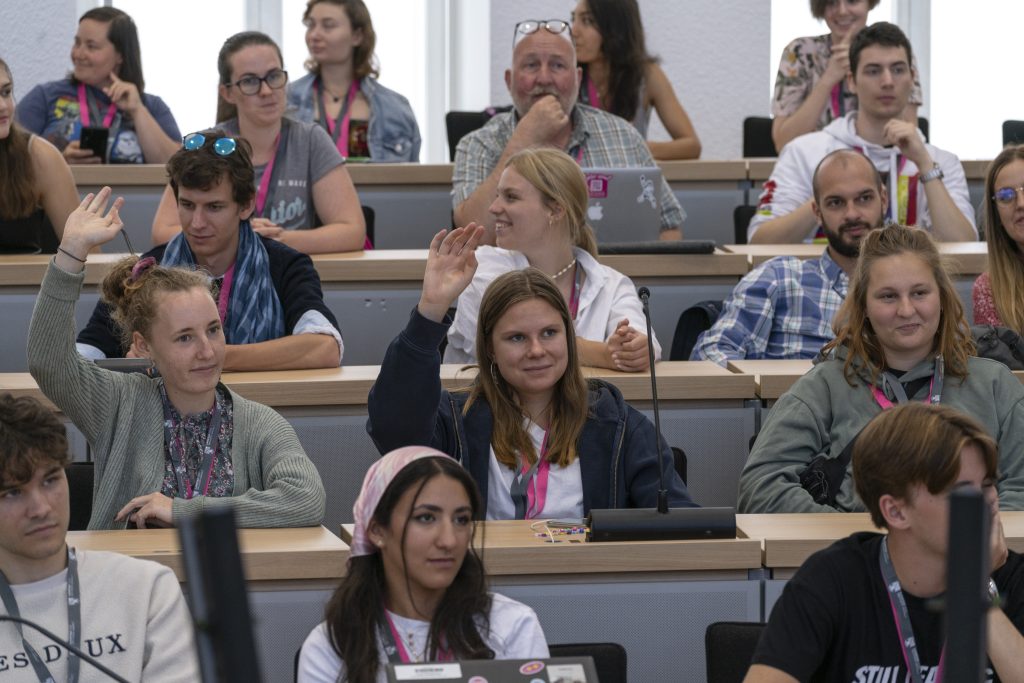
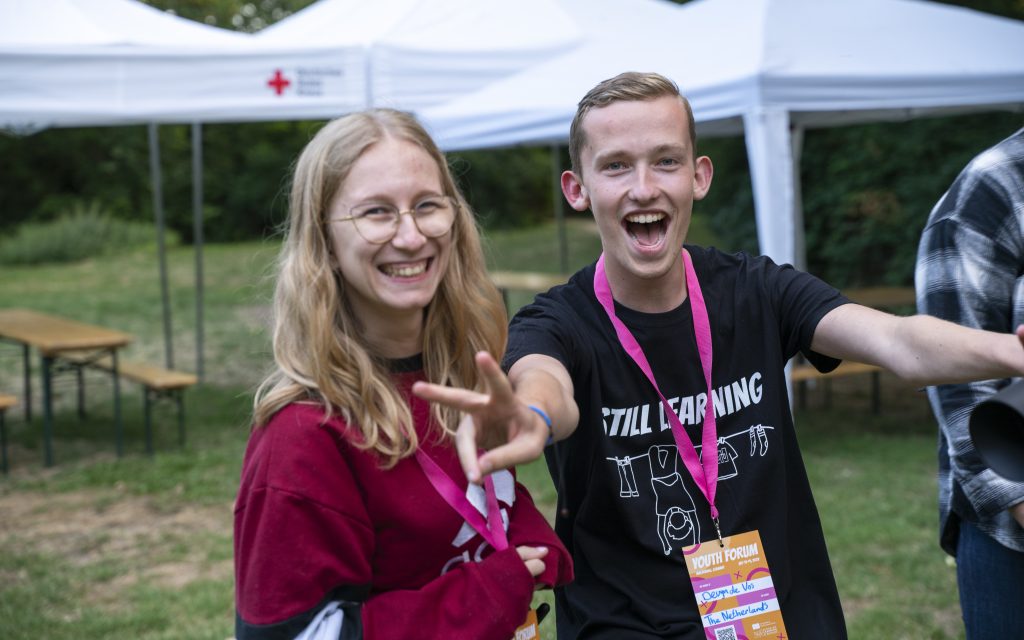
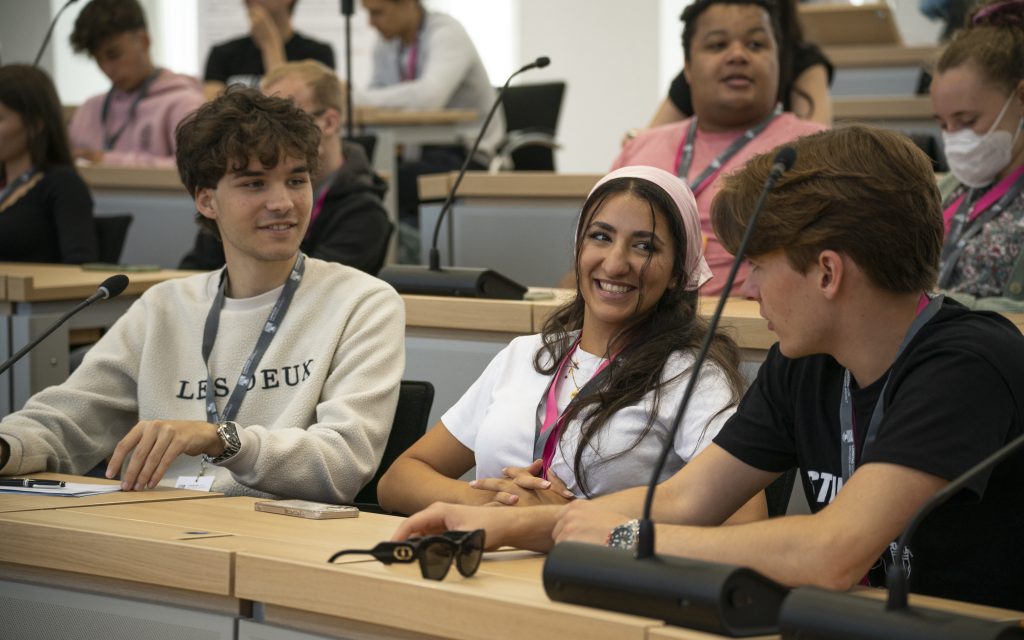
Cities of Learning is a project that aims to engage, connect and empower young people to learning, civic engagement, and careers. In July, more than 100 young people, youth workers, educators, policy and decisionmakers of the forum created 20 policy recommendations that they believe are vital and must be addressed in the next 10 years. Photographer Bennet Rietdorf made a photo coverage of the day.
All these policy recommendations of Cities of Learning fall under five priority topics:
These are the Cities of Learning Policy Recommendations. You can also find the document with recommendations in this pdf or read all about it on the website of Cities of Learning.
“These recommendations are numbered for the purpose of reference only and not because of any one being more important than another. We believe all our recommendations are equally important and some should even be viewed collectively.”
“These recommendations should be viewed holistically.
A.1 Schools should have at least one day of non-formal learning every month, delivered by professionals, young people or other individuals with experience in the field.
A.2 Stakeholders in formal education settings (including senior leaders, teachers, lecturers, parents, volunteers and others) should be better informed of the benefits of non-formal learning and should be connected with role models and professionals in the field.
A.3 Support and ensure more research is carried out on the impact, benefits and purpose of non-formal learning so they can be explained to stakeholders (including employers, parents, teachers, volunteers, lecturers and others) in order to promote it.
A.4 Local governments should facilitate and provide the resources for collaboration between NGOs, schools and other partners, creating a stronger and more holistic network where countries are able to work from the same baseline.”
“*DEMANDS NOT RECOMMENDATIONS
B.1 Ensure people are better informed about the benefits of sustainable lifestyles, empowering them to be advocates, custodians and campaigners for the planet. B.2 Businesses must be required to publish accurate, standardised data about pollution they produce in an accessible format and this process must be regulated independently. People should be empowered to put pressure on them based on the data.
B.3 Ensure young people are better informed on the issues so they can have an active role in shaping decisions about issues that affect their futures. This should include topics such as; circular economy, public awareness, extraction of resources, consumer practices and transport.
B.4 Governments should immediately take action on practical and solvable things including implementing policies and practice such as:
“C.1 Create more specific opportunities for participation of excluded young people (inclusive events, activities, language learning for inclusion, increased mobility to gain essential life experiences).
C.2 Local and regional governments should provide the resources to enable safe spaces, projects and activities for community cohesion and cultural exchanges that are available, relevant and engaging for their communities.
C.3 Formal education settings should actively facilitate a safe place to discuss LGBTQIA+ topics, including providing staff with appropriate training that allows young people the freedom to express themselves.
C.4 Create accessible and inclusive spaces and events accessible for all young people with disabilities by providing access support such as Personal Assistants, suitable physical infrastructure, sign language interpreters and Braille.
C.5 Governments should immediately provide the resources to enable specific opportunities for the integration of young refugees and immigrants to ensure they feel part of the community.”
“These recommendations should be viewed holistically.
D.1 Considering and acting on young people’s opinions and interests must be a legal requirement for governments at local, regional, national and international levels. There must also be a mechanism to challenge decisions with clear timeframes and processes.
D.2 Campaigns and involvement opportunities should be designed to be engaging and appealing to young people, reaching them through the channels and locations they use and should promote political engagement.
D.3 Governments should ensure advisory youth councils and parliaments are established at local, national and international levels and provide a meaningful and impactful, creative and age appropriate democratic opportunity.
D.4 Governments at local, national and international levels should secure sustainable funding to ensure young people have the opportunity for participation projects and being part of a youth council or parliament.”
“E.1 The government should provide funds for schools to integrate the mental health and
healthy lifestyle practices in formal education by developing:
E.2 The government should develop proper recourse mechanisms for free mental health services including:
E.3 The government should recognise the importance of mental health and its visibility. They should do this by:
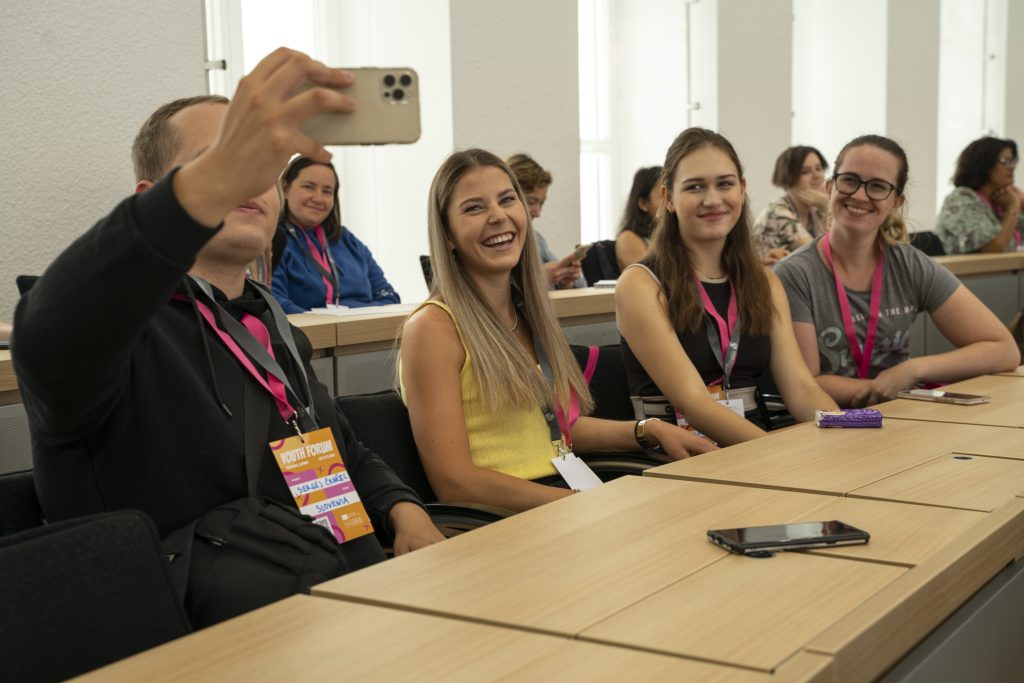
Cities of Learning is an online platform where young people can find learning opportunities. You can browse an interactive map of an area or look up events and learning opportunities based on your interests.
Find more about Cities of Learning here:
Europe Goes Local will once again join the European Week of Regions and Cities. This time, we will join the round table “Youth participation, why should we care?” during the event “YOUTH PARTICIPATION – How to foster youth participation in local communities?”. The discussion will take place on the 25th of October at 10.CET. You can register here.
The other participants will be the city council of Altea, project VOLUNTEU: Volunteering citizens as a response to social COVID19 crisis, JINT, the municipality of Idrija, and the project Governance and Youth in the Alps. Europe Goes Local has also ran joint sessions in the past.
Youth participation is key to the democratic and inclusive development of local communities. Join EU Region Week on 25th October at 10.00 CET to learn how to foster youth participation in practice.
The event “YOUTH PARTICIPATION – How to foster youth participation in local communities?” will highlight the importance of youth participation for the development of local communities, showing approaches and funding opportunities available. It’s a follow-up event of the “Getting more children and young people participating in the workings of democracy: success stories” event, organized by DG JUSTICE and EACEA during the EU Week of Regions and Cities.
The debate will be moderated by CERV točka, Slovenian national contact point of programme CERV.
For additional information please write to cerv-tocka@pina.si.
You can find the pdf with the invitation here.
Apply for the seminar ‘Visible Value: Strengthening the implementation of the European Youth Work Agenda in Eastern and Southeast Europe’ by 29 September!
Find more info here.
The study visit will provide insights to the reality of local youth work and youth participation, through visiting three municipalities of the region. It will take place from the 9th to the 12th of November in Trenčianske Teplice, Slovakia. The application deadline is 4 October.
The study visit will provide insights to the reality of local youth work and youth participation, through visiting three municipalities of the region. You will meet a diversity of local stakeholders, experts and practitioners and reflect on quality aspects of youth work and youth participation from the perspective of Europe Goes Local and Democracy Reloading tools.
You can find more information and apply here.
During this study visit you will to get to know the Finnish youth sector and youth participation work in Finland, especially in the municipal field and locally. The study visit will take place from the 12th to the 16th of December in Helsinki, Finland.
Aims & objectives
Participants
The Study visit seeks to involve and invite various actors and stakeholders of youth work, youth participation and the inclusion sector from practice, policy and research from all over Europe.
Accessibility and sustainability
The venue where we organise the event is accessible for wheelchairs. We will also consider your special needs so that you can fully participate in the training. If you need a support person, accessible room and transport or supporting tools, we will try to arrange them for you. If you are selected to attend this Study visit please tell us your needs already beforehand so that we can be ready. We will also send a questionnaire about special needs and dietary restrictions to all those selected.
Find more information and how to apply here. The application deadline is 25 September.
Are you a municipality officer (or their partner) who wants to improve your youth policies, structures, and projects engaging young people in municipal decision-making?
Then apply for a webinar from Democracy Reloading this autumn! There are webinars on 28 September, 26 October and 30 November 2022.
The webinars will
Find more info and how to apply here.
The second Project Lab of Europe Goes Local focuses on rural youth work. This training will take place in Chalkidiki (Greece) from the 14th to the 17th of November 2022. The participants will also join a preparatory webinar and an online meet and greet session in October. If you’re interested in a general Project Lab about local youth work, you can apply for the Project Lab in Bonn.
The Europe Goes Local Project Labs are international training and networking events. They bring officials and practitioners in youth work together to strengthen the usage and exploitation of the possibilities offered by the Erasmus+ and the European Solidarity Corps programmes for youth work at municipal level.
Specifically, the Project Labs aim to:
Find more information about this project lab on rural youth work here, and apply until the 20th of September here.
You can also still apply for the Project Lab in Bonn until the 5th of September. This project lab doesn’t have a specific theme.
This Project Lab in Bonn (Germany) is an international training and networking event to strengthen the usage and exploitation of the possibilities offered by the ERASMUS+ and the European Solidarity Corps programmes for youth work at municipal level. The event will go on from the 19th to the 21st of October 2022.
The Project Lab aims to …
Apply until 5 September 2022 here.
If you’re interested in rural youth work, you can apply for the Project Lab about rural youth work in Chalkidiki until the 10th of September. You can find more information here.
In the framework of the Europe Goes Local project, the German and Hellenic National Agencies of Erasmus+ and European Solidarity Corps programmes are looking for trainers who will be part of a team that will implement the Europe Goes Local (EGL) project labs in 2022. The application deadline is the 25th of July
Two project labs are foreseen in 2022.
The first project lab has a general focus and will take place in in Bonn (Germany) from 19-21 October 2022 (including arrival and departure).
The second project lab is focussed on municipalities and local organizations from rural areas. It will take place from 14-17 November 2022 in Halkidiki (Greece).
Both project labs will have around 30-40 participants from the programme countries and neighbouring partner countries of the Erasmus+ and European Solidarity Corps programmes.
There will also be a joint preparatory webinar for the participants of both events during the week of 3-9 October.
Essential skills and experience:
Advantage:
All costs of travel, board and lodging incurred in relation to the meetings and events will be covered by the organisers. Expert fee (gross): €320/working day.
The number of working days depends on whether the trainer facilitates only one or both project labs.
Find more detailed information and how to apply here.
You can also find the call for participants here.