The Latvian National Agency organises a study visit “Youth Workers’ well-being” from August 17 to 19 2022 in Latvia. This target audience are youth specialists, youth workers, youth policy makers, NGO representatives,… involved in youth work.
Youth work is constantly developing and being assigned new roles and functions, such as building civil society, improving social inclusion, preventing health risks, etc. With this continual evolution, the focus and aim of youth work is to ensure quality systems and frameworks that guarantees its improvement and shows its impact and value. The concept of quality youth work, however, can’t only focus on the development of standards, indicators, methods and manuals. So supporting development of quality to create lasting impact on the lives of young people includes the quality of well-being and wellness of youth workers themselves.
“Youth workers’ jobs are challenging and dynamic”
Agnese Karklina, Project Coordinator at the Latvian National Agency
Youth workers are facing multiple challenges, such as burnout, municipal employee turnout, and lack of support from employers. In addition to this, they’ve carried the weight of a global health crisis. And recently, there has been the destructive consequences of a war nearby, which all of these bring the urgent necessity to light to address all issues around the emotional and mental well-being of youth workers.
The Agency for International Programs for Youth in Latvia is organising a study visit within Europe Goes Local to bring awareness to and spotlight the importance of the psycho-emotional well-being of youth workers.
We talked to Agnese Karklina, Project Coordinator at the Latvian National Agency. She told us about the significance of this study visit and why the well-being of youth workers is an essential precondition for developing quality youth work.
Agnese: “Youth workers’ jobs are challenging and dynamic. It takes a lot of energy and resources to work directly with young people; by creating individual plans, consultations, mentoring, creating group activities, trying to find funding for everything, writing projects, and implementing new services. Sometimes youth workers forget about themselves in this process, or they put their needs on the last place. At the same time balancing the workload and private life raises questions: Am I being appreciated in my work? Is anyone thanking me? Am I being paid enough? Is it worth it?”
Agnese: “Youth workers’ health and emotional well-being directly affects productivity and motivation at work. Having good emotional health for youth workers is a fundamental aspect of fostering resilience, self-awareness, and overall contentment. And it goes together with the capability to be more productive in their work hours, staying motivated, raising their problem-solving skills and helping to be more solution-oriented.”
For who: youth specialists, youth workers, youth policy makers, NGO representatives, etc. involved in youth work
When: 17 – 19 August 2022 in Latvia
Arrival: expected on 16 August 2022
Departure: 20 August 2022
Application Deadline: 26 June 2022
Where to apply: http://trainings.salto-youth.net/10298
Furthermore, you can find more information about the Latvian National Agency on their website, Facebook, Instagram, Twitter, LinkedIn, YouTube, or TikTok.
SALTO Eastern Europe and Caucasus made beautiful videos of their EGL municipalities. We’ve bundled all the videos of SALTO EEC for you here. You can click on “subtitles” on YouTube to watch the video with English subtitles.
Let’s start with the municipalities in Moldova!
The first video is about Cahul, which is a city and municipality in southern Moldova. The city is the administrative center of Cahul Distract.
The next municipality is Sipoteni, a commune in Călărași District.
SALTO EEC also made three videos about their EGL municipalities in Georgia: Chokhatauri and Zugdidi.
Chokhatauri is a town in Georgia’s Guria region, 310 km west to the capital of Tbilisi. It is an administrative center of Chokhatauri Municipality, which comprises the town itself and its adjoining 60 villages.
Zugdidi is a city in the western Georgian historical province of Samegrelo (Mingrelia). The city is located 318 kilometres west of Tbilisi, 30 km from the Black Sea coast and 30 km from the Egrisi Range.
The first video of Zugdidi is about their culture center.
And then we also have the video about the library in Zugdidi.
We posted one video a week on our social media, and this concludes our weekly videos. You can also watch all of them on the YouTube channel of SALTO Eastern Europe and Caucasus Resource Centre !
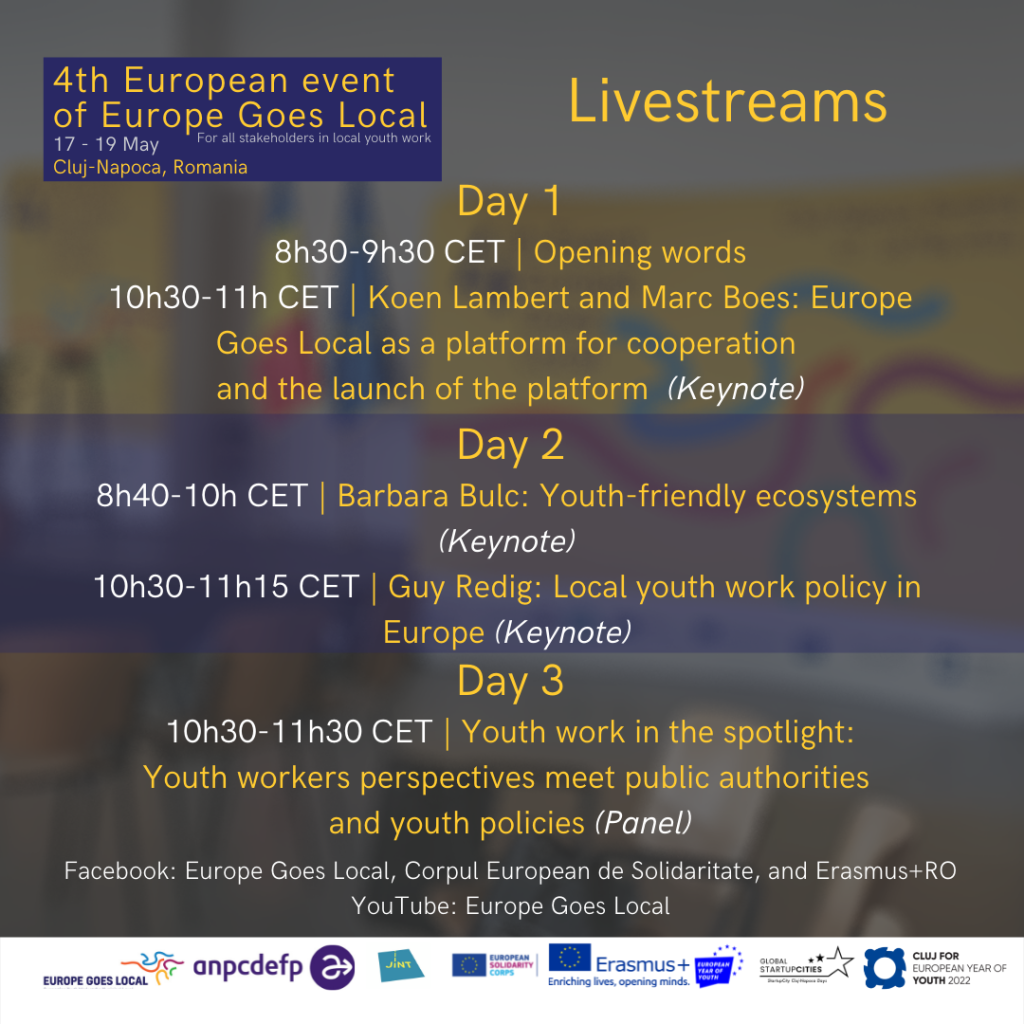
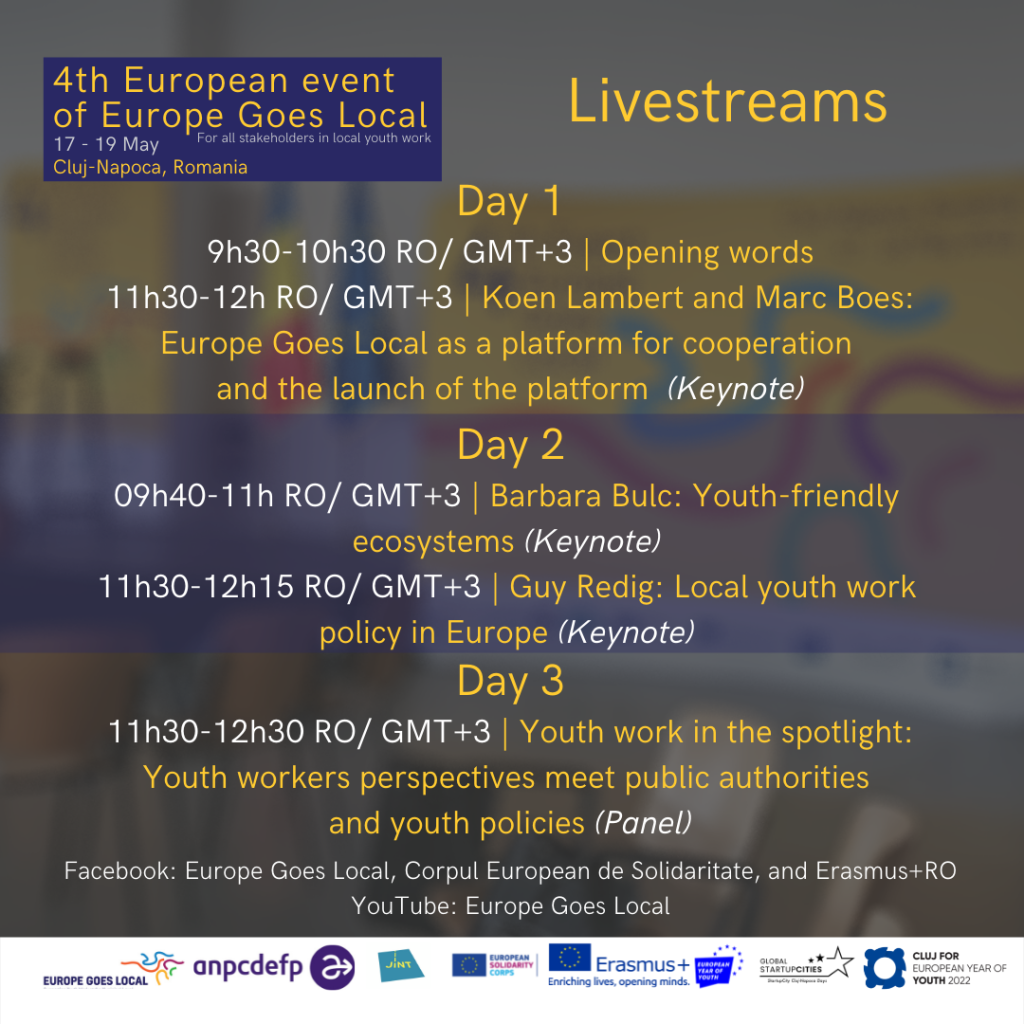
Weren’t you able to join us to our conference Romania? No worries, you can rewatch our livestreams from the 4th EGL event on our YouTube playlist!
The first day of the conference was the 17th of May 2022. You can re-watch the opening words online. There was also akeynote about “EGL as a platform for cooperation and the launch of the platform” by Koen Lambert and Marc Boes.
Barbara Bulc talked on the second day about “youth-friendly ecosystems”. Later in the day we were joined online by Guy Redig, who talked about “local youth work policies in Europe”.
On the last day we had a panel about “youth work in the spotlight: youth workers’ perspectives meet public authorities and youth policies”. The guests of the panel were: Mariya Gabriel (European Commissioner for Youth), Izabella Kacsó-Doboly (Youth Affairs Secretary of State in the Ministry for Youth in Romania), Ilaria Zocco (Project Manager, Associazione Culturale IL VERGANTE in Italy), Apostolos Tzitzikostas (President of the European Committee of the Regions), Emil Boc (Mayor of Cluj-Napoca, Romania), Ricardo Rio (Mayor of Braga, Portugal), and Victor Cătălin Toma (Asociaţia pentru Dezvoltare Activă ADA Bacău, Romania).
During the conference you could watch the livestreams on the Facebook pages of Europe Goes Local, Corpul European de Solidaritate, and Erasmus+ Romania.
Activating Citizens: Municipalities Making Use of the European Solidarity Corps will go on from 21-22 June 2022. It will be two half-day sessions from 9:30 to 15:00. The deadline to apply is 22 May 2022.
The seminar will:
During this training course you will:
There will be 30participants from Europe and the partner regions (Western Balkans, Eastern Partnership Countries, and South-Mediterranean countries). The Bulgarian National Agency for Erasmus+ and ESC, European Solidarity Corps Resource Centre, and Europe Goes Local are hosting this training course.
More info and apply here.
Join us at Europe Goes Local Webinar – Introduction to Participatory Action Research in Youth Work. The webinar will take place on Thursday, 28th of April 2022, via Zoom from 10h CET to 13h CET.
Participatory Action Research (PAR) is a way to invite local communities to learn about their own needs and aspirations. Youth workers and local youth supporters can use it to involve young people and other stakeholders in reflection, collaboration, and social change processes.
It will include interactive activities, a presentation by an expert and practitioner of PAR, small group reflections, and plenary discussions.
In this Webinar, you will:
Apply by the 24th of April here.
The 4th European Event of Europe Goes Local is fast approaching! EGL is launching its platform for stronger cooperation on May 17th – 19th in Cluj-Napoca, Romania.
But that’s not all. You will also:
We invite all local youth stakeholders who are committed to raising the quality of youth work and making a difference in their countries to apply and attend our event.
The application deadline is April 28th, 2022. More info and apply here.
EGL is looking for applicants for two study visits in Finland happening this May! The deadline to apply is April 19 2022.
The study visit “Youth Work in Schools” will happen in Lahti from the 15th to 19th of May 2022. You will learn how the role of youth workers is enriching the school environment, how youth workers are engaging with the youth and also with teachers and the wider educational community.
Apply for this study visit here.
The study visit “Municipal Work in Helsinki” will take place in Helsinki from the 16th to the 19th of May. You will learn how the city of Helsinki organizes its municipal youth work, what the structures are,
how administrative planning is done, how priorities are set, how the stakeholders are included, and what evaluation system is in place.
Apply for this study visit here.
Our colleague Judit talked about The Changemakers Kit and EGL at DYPALL Network‘s conference “Building Resilient Communities” and their training course “Youth Takes The Floor” in Braga.
The Conference was organised with the support of Agência Nacional Erasmus+ Educação e Formação.The training was organised with the support of the European Youth Foundation of the Council of Europe . Both activities were supported by Município de Braga.
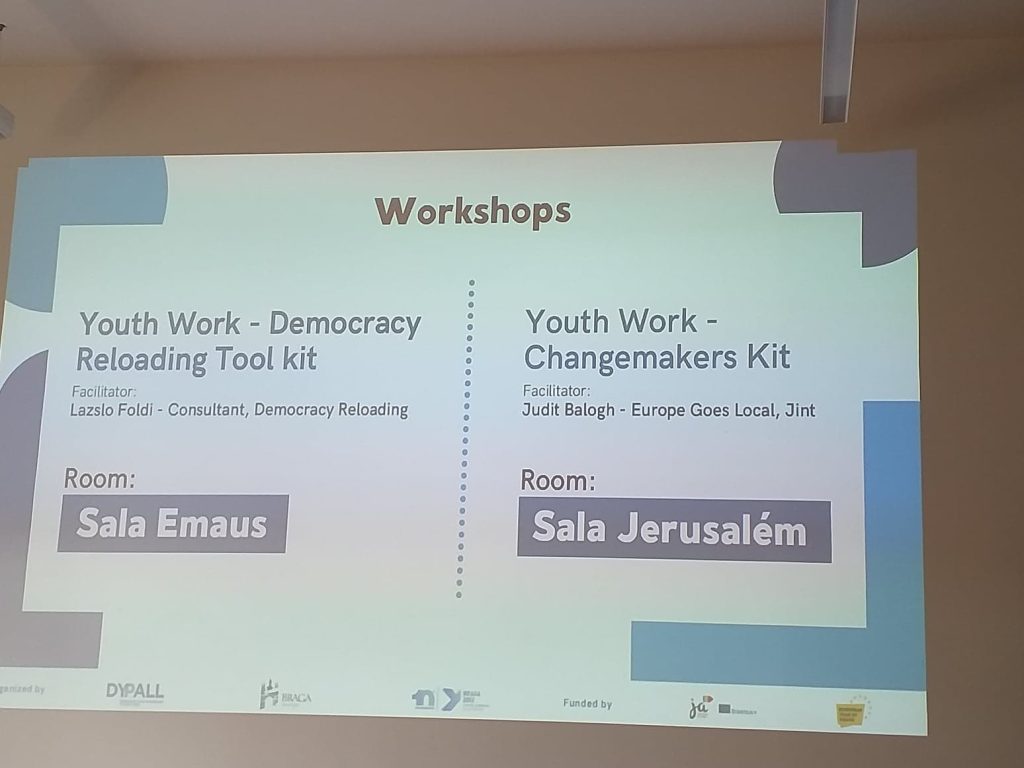
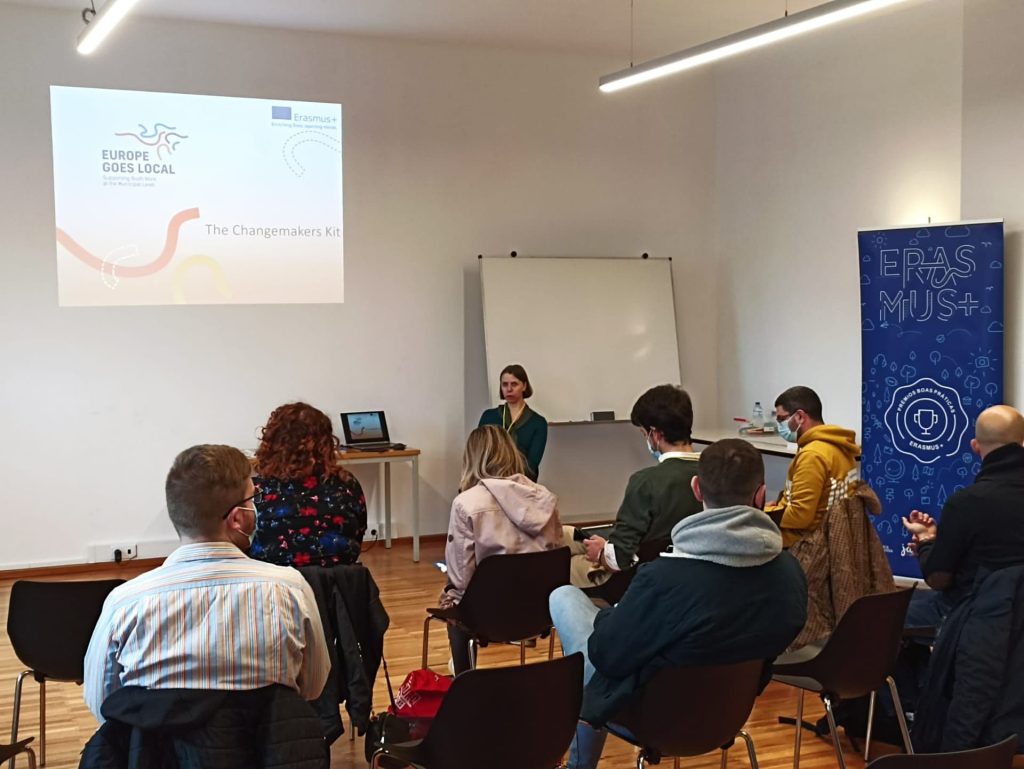
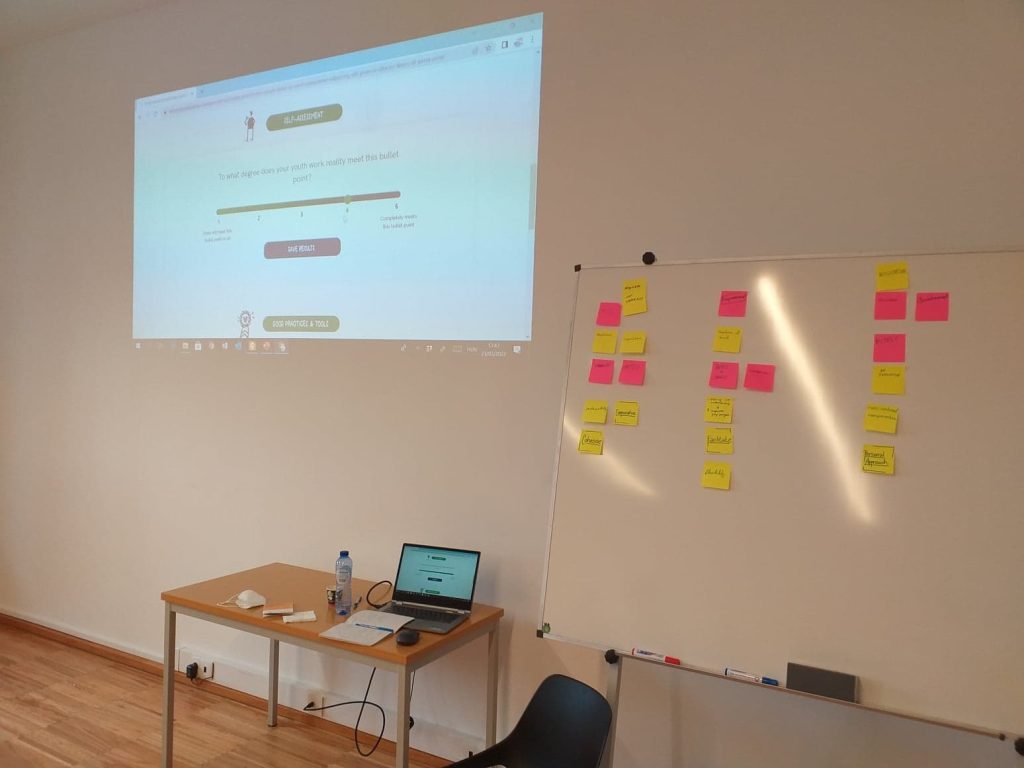
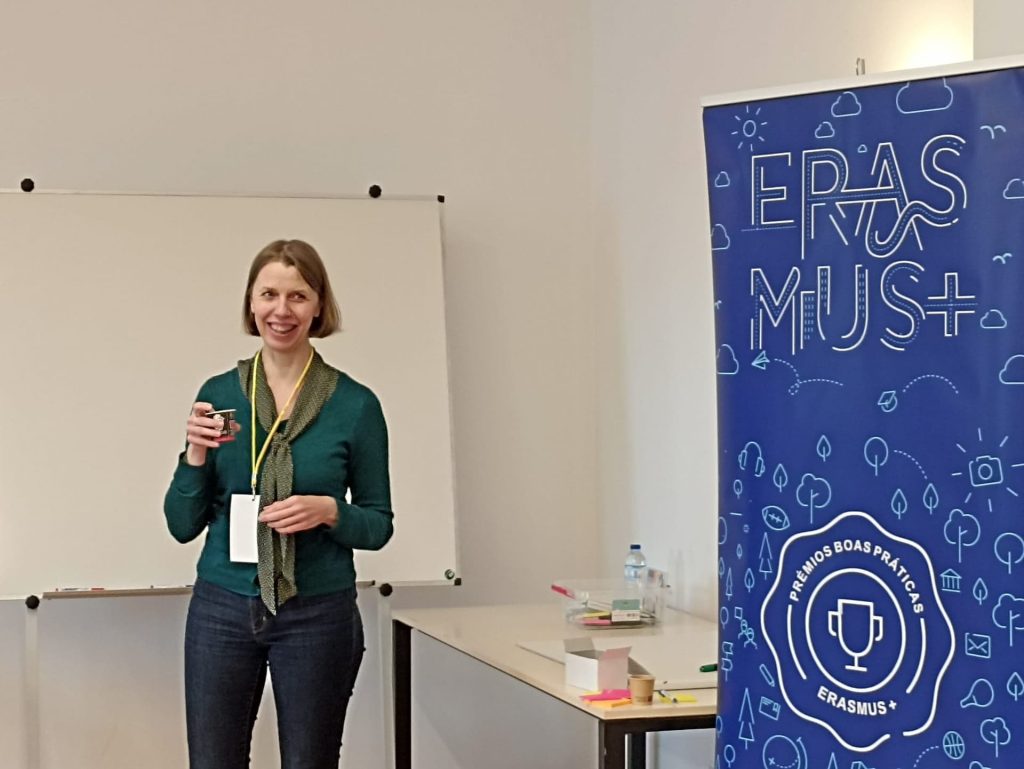
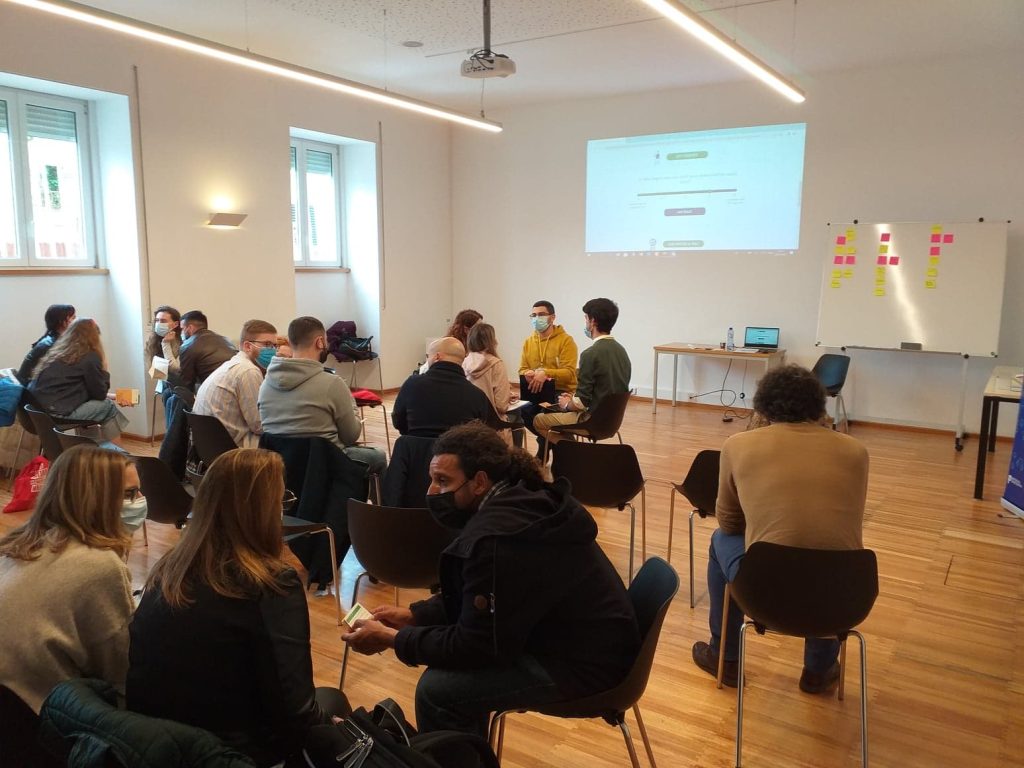
Are you also curious about The Changemakers Kit? You can find it here.
EGL Project Coordinator Judit Balog was one of the keynote speakers at the transnational NET Activity “Rural Areas, Challenges and Solidarity” held this March.
The Hellenic National Agency for Erasmus+ and the Youth & European Solidarity Corps organized the NET Activity and hosted 35 participants from all over Europe. There were representatives of municipalities and youth organizations from rural areas, but also youth workers who work in rural areas around Europe. The participants were people who are interested in exploring the opportunities that the European Solidarity Corps and other programs can bring to these communities.
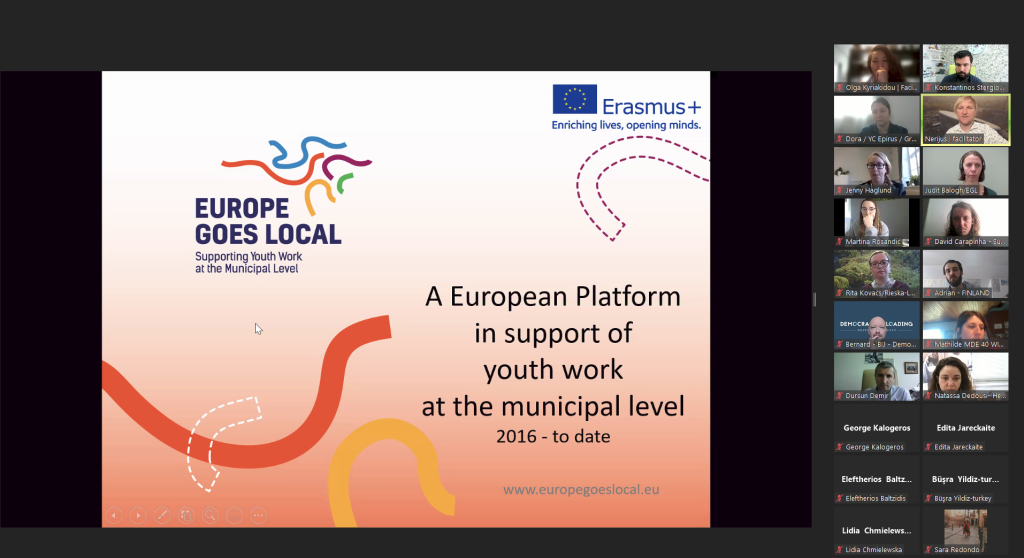
Ms. Balog presented the activities of the Europe Goes Local project, explaining how the participants could benefit through EGL, learn more about good practices in local youth work, and related resources for quality development of youth work.
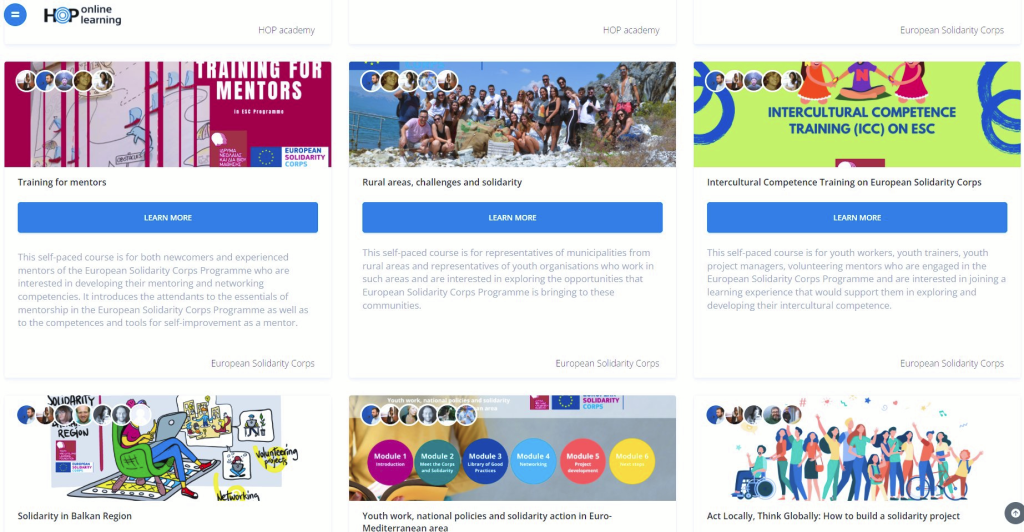
This NET activity, and many others you will be able to find on the HOP Online Learning Platform. This serves as a learning resource center for online courses for youth work communities of practice. The HOP platform was launched in 2017 in cooperation between several SALTO Resource Centres and National Agencies of Erasmus+ as a base for their online course on volunteering activities. The platform also hosts other courses, creating a wide community of online learners.
Hop on here: https://hop.salto-youth.net/
We went to talk with Democracy Reloading during their last training course, and we discovered what they do. Learn all about it in this video!
Are you sad that you missed their last training? Luckily, can still join them on their next training course in July!
It’s open to municipality officers and their local partners who want to improve their youth policies, structures, and programs engaging young people in municipal decision-making!
You can find more info here.