

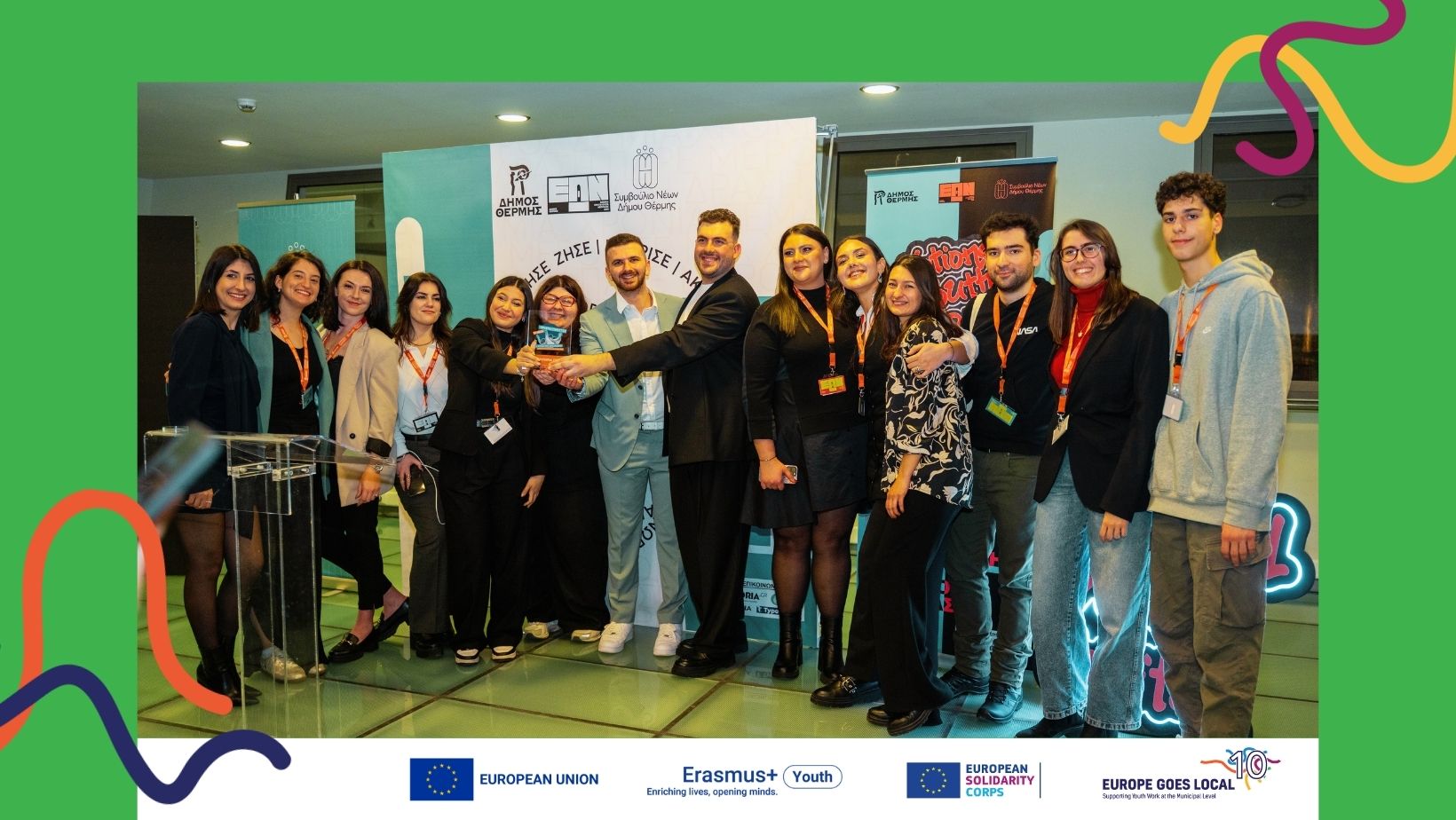
During our European event this year in Tromsø, Norway, we had the pleasure of interviewing Stefania Kampouri, a youth officer in the Youth Council of the municipality of Thermi, Greece. The Council runs since 2020 and was created to give young people a structural role in the local community and offer them a space for expression, dialogue, and action. Six years later, Stefania reflects on their results, impact and future initiatives.
Thermi Youth Council has been successful in lobbying for democratic participation and civic space in the municipality. What are the specifics of the method you use – sociocracy?
The Council’s working method is sociocracy. In October 2025, the Council published its Rules of Operation Handbook, which sets that method down in writing. The reason is practical: a youth council renews its membership every few years, and practice that is never recorded tends to leave with the people who developed it. Documenting the method is itself a safeguard for civic space, since an unwritten rule can always be reinterpreted by whoever is most confident in the room.
Sociocracy – from socio, meaning fellow, companion, stakeholder, and kratos, meaning power, authority, governance – is a method of participatory decision-making by consent and an organisational model for groups and organisations. In practice, it provides a structure in which information circulates and remains freely accessible, and in which every member participates on equal terms in pursuit of the common goal. The Council deliberately goes beyond simple voting and uses consent-based decision-making so that young people can co-create local strategy. Four principles carry the method.
• Consent. A proposal is adopted when there is no weighty, argued objection to it and when it serves the aims of the organisation. For a decision to be taken in a circle, consent is required from every member of that circle. Where consent is absent, the proposal is readjusted or the objection must be argued. This is the central safeguard of civic space inside the Council: no member is outvoted, and an objection obliges the circle to keep working on the proposal rather than to set it aside.
• The circle. Semi-autonomous working circles meet and take the basic and policy decisions on matters falling within their own remit. Applied geographically, this principle forms the basis of the decentralised model of local circles described in question 3.
• Double linking. In every circle and sub-circle, two members are elected to carry representation from the top down and from the bottom up. They take part in both circle meetings – parent circle and child circle – carrying and taking decisions for the benefit both of the common goal of the organisation and of the circle to which they belong.
• Open election. The key and operational roles of circles and sub-circles are filled through open discussion and election by consent, rather than by secret ballot. Roles are proposed and argued before the group, which is what makes it possible to hold them to account afterwards.
Each agenda item follows the same five stages. First, the member who submitted the topic introduces it concisely, providing the necessary information and the framing of the proposal. Second, the remaining members put clarifying questions. Third, a round of opinions takes place, in which each member states a view, perspective or proposal; further rounds follow if more clarification or elaboration is required. Fourth, the facilitator formulates the final wording of the decision and puts it to consent. Fifth, if all members consent, the decision is approved. It is then recorded in the minutes by the Secretary or by the member who has undertaken the written record of that meeting.
Meeting dates are set flexibly through a shared availability form, usually When2Meet, circulated by the Internal Communication Officer, so that the time chosen serves the greatest possible number of participants. The facilitator is appointed by full consent of the members present and is responsible for ensuring that every member has space to speak, that decisions are taken collectively and on equal terms, that participation is encouraged, and that time and the agenda are respected. The role may be held by a different member at each meeting. The agenda is prepared by the Secretary together with the Internal Communication Officer on the Council’s shared Drive, so that it remains accessible and open to editing, and is then sent by email to all members. A member who submits a topic is responsible for its title, an estimate of the time required, its type – discussion, or discussion and decision – and brief material allowing the others to prepare. Each session opens with a check-in, in which members state briefly how they are and whether they need to leave early, and closes with a check-out. The minutes record the date and time, the mode of the meeting – online, hybrid or in person – and the members who took part. Responsibility for keeping them does not rest with the Secretary alone; it may be undertaken by any member of the circle, by consent.
Tell us more about your strategy of collaboration with experienced youth workers?
When the Council was established, the Municipality engaged experienced youth workers with specific expertise in sociocracy to accompany the first members through the method. That decision shaped everything that followed.
The method is demanding in ways that are not immediately visible. Consent is not the same as consensus, an objection is not a veto, and a facilitator is not a chairperson. Without practitioners who had already worked with the method and could guide the group while it learned, a newly formed council would very probably have returned to more familiar habits – the strongest voice prevailing and a show of hands settling the matter.
Alongside this, the Municipality established a working relationship with the Hellenic Youth Workers Association (Πανελλήνιο Σωματείο Συμβούλων Νέων), which remains active to this day. It was never intended as a service limited to the founding phase. Its purpose was, and continues to be, to ensure that the young people passing through the Council are trained properly and responsibly, by people qualified to do so.
Since then the Council has cooperated with these Certified Youth Workers on a wide range of matters, and particularly on European programmes, where their experience has been decisive in moving from an initial idea to a well-designed and feasible project. The Council regards this continuing relationship as one of the most valuable elements of its experience, and as the part most worth sharing with other municipalities.
What the arrangement protects, above all, is the credibility of youth participation. A youth council can easily become ornamental – consulted, photographed and then set aside. Sustained professional support is what prevents that. It gives each incoming generation of members access to the same quality of training as the one before, so that the method is inherited rather than reinvented, and it means that when the Council meets the Municipality, its members arrive prepared for the discussion.
The Council’s internal structure is designed to receive that support and to hold it in place. The Internal Communication Officer maintains contact with the Directorate of Education and holds the keys to the Council’s office. The Secretary handles correspondence with the Municipality, partners and other bodies, and keeps the treasury together with the record of trips and of the members who have taken part in them. The agenda of every session is sent not only to all members but also to the Municipality’s Delegated Councillor for Youth, so that the municipal side is informed of the matters to be discussed before they are discussed. The External Communication Officer is the designated link with other youth councils, non-governmental organisations, associations and bodies, and with local, national and international networks.
What is interesting about your model is that the structure can integrate a big quantity of young people. This is quite useful in terms of outreach – working with youth in remote places or rural areas. How does this work – even in rural and remote areas!?
The model works because it does not require young people to travel to any ‘central location’ in order to take part.
The geography explains the design. In its present administrative form the Municipality of Thermi was created under Article 1 of Law 3852/7-6-2010, the Kallikratis Programme, from three municipal units – Thermi, Mikra and Vasilika – covering 385,321.80 stremmata (approximately 385 square kilometres) across fourteen settlements, with its seat 15 km from the city of Thessaloniki. A council that meets only in the town of Thermi is, in practice, a council for the young people of Thermi. The others remain invited in principle and absent in fact.
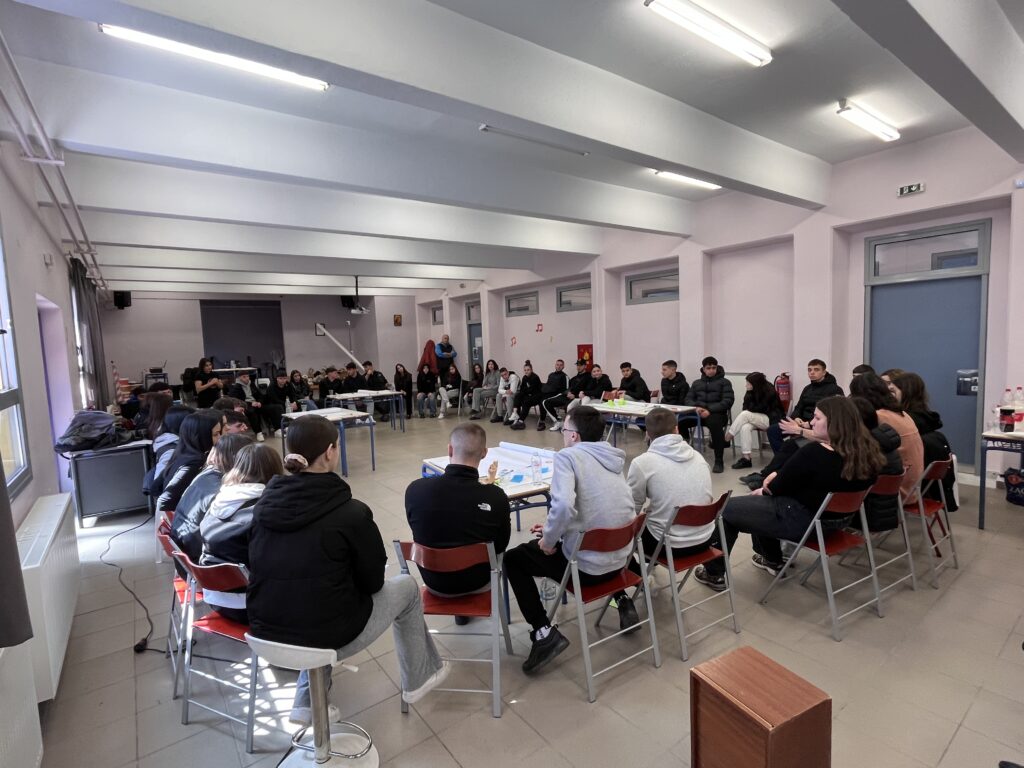
For this reason the sociocratic model is applied geographically. The organising tool for meaningful youth participation in rural settings is a decentralised structure of local circles: the model provides for each village within the municipality to form its own circle, which sends a representative to the General Circle through double linking. This is how the Council worked through its first years, and it is what gives young people in the more remote and rural parts of the municipality (for example Trilofos, Vasilika, Agia Paraskevi) a direct voice and an active role in the commons. It is also what allows the structure to absorb large numbers. A single central assembly has a natural limit, namely the number of people who can speak meaningfully in one room on one evening. A federation of local circles does not. It grows by adding circles rather than by lengthening the list of speakers.
It is important to be accurate about the present situation, since an honest account is of more use to other councils than a promotional one. The local circles were in operation during those first years. At present, the General Circle is the only circle meeting. The structure itself has been built, tested and proven in practice, and it can be reactivated at any moment — and there is genuine anticipation in the Council for the day that happens. As more young people remain in their villages, or return to them, and take an interest in the affairs of their communities, the local circles will reopen, the child-circle and General-Circle system will operate again, and the structure will hold far more young people than a single circle ever can.
Three further layers sustain the Council’s reach in the meantime:
As the national youth capital 2026, what is the municipality of Thermi building this year and advocating for beyond this year, on the local level, regional and perhaps national?
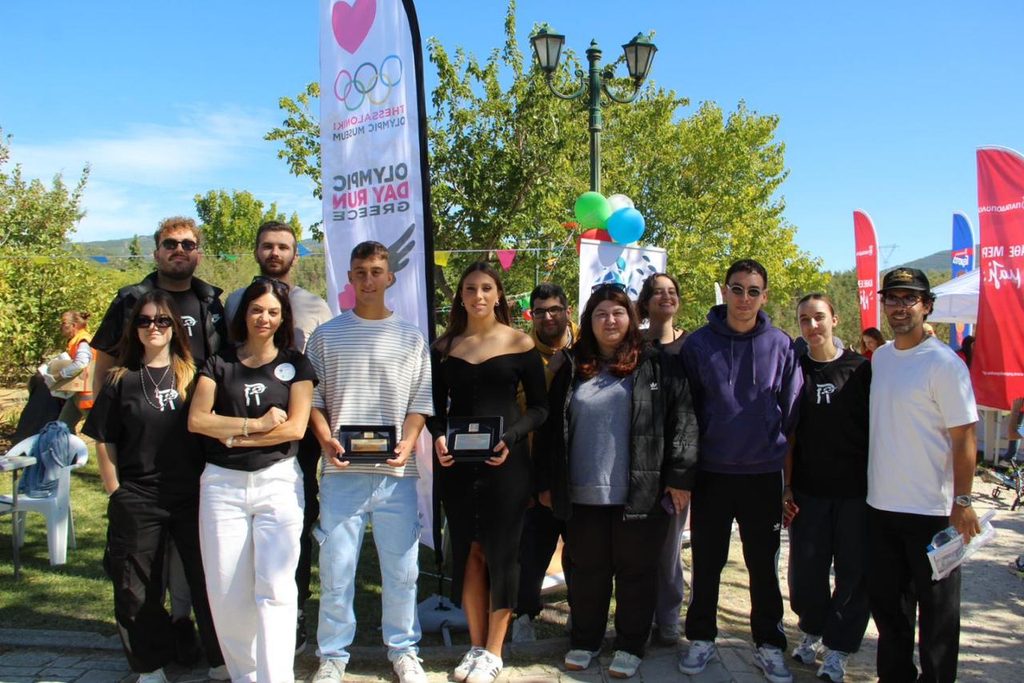
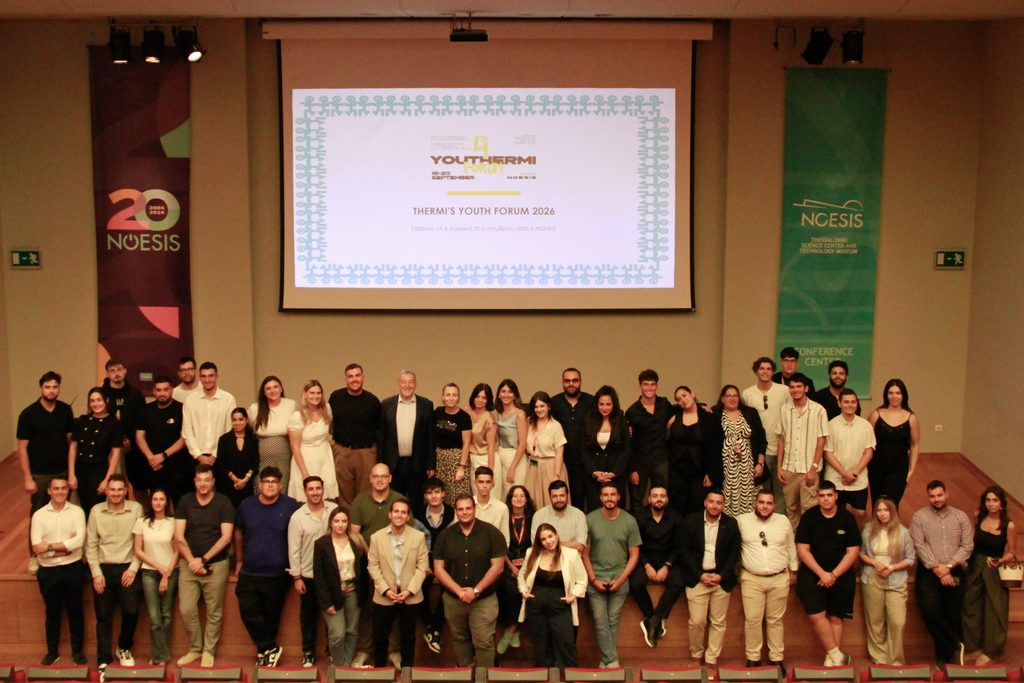
• At local level, the programme for 2026 rests on four thematic pillars – active citizenship, culture and environment, sport, and youth entrepreneurship and employment – together with two horizontal commitments, impact measurement and youth-friendly policy. Several actions are already defined. A series of local projects has already been developed in each community and village of the municipality, through an open call and structured consultation, with young people co-designing initiatives alongside local associations and active citizens. The target is at least ten projects, one in each participating community. An Open Air Art Festival at the Thermi Dam ran for over a month in the summer of 2026, with concerts, open-air cinema and theatre, and a volunteer programme involving at least 50 young people. The 4th Thermi Youth Forum continued as the Municipality’s public space for youth dialogue, alongside Olympic Day Park, which will be held for the third year, the strengthening of school career guidance, and structured consultation in schools. Provision has been made for the inclusion of young people with disabilities in both the sports and the career-guidance strands.
• At regional level, the Municipality has secured the support of the Municipality of Lamia with the aim of forming a network of cooperation between Northern and Central Greece – an interregional partnership with young people at its centre, intended as a model of participation and of the exchange of good practice.
Alongside this, the Council received and conducted experiential training on EU rights and policy design for young people in the Northern Greece region through “Youth Action for Democracy”, funded by the Active Citizens Fund, and takes part in international training seminars, including those of the DYPALL Network, with the same purpose: to return European practice to local and less-privileged communities. European funding instruments, in particular Erasmus+ and the CERV programme, are combined with national, regional and local sources.
• At national level, the Youth Forum is being opened to all youth councils in the country, which are invited to contribute topics and presentations on questions such as the role of local government in activating young people and the EU Youth Strategy. Beyond the Forum, what the Council advocates is that a youth council requires professional accompaniment, which is why the relationship with the Hellenic Youth Workers Association is significant beyond the boundaries of one municipality.
More specifically, the 4th Thermi Youth Forum divided its participants into three facilitated working groups – on youth participation in decision-making, on youth councils and local democracy, and on priorities for a National Youth Strategy – each required to produce a small number of concrete proposals rather than an open discussion, which were then presented to the plenary, with the facilitators briefed to support the discussion rather than to supply the answers. The conclusions of the three groups are now being compiled into the Forum’s final resolution, which will be circulated to youth councils across Greece for adoption and then handed on to the next National Youth Capital, so that the work continues beyond Thermi’s own year. None of this would have been possible without the close cooperation of the Council with the Association and with Olga Kyriakidou.
A further condition is that a youth council requires a written method that can be handed on, which is why the Rules of Operation Handbook was published rather than left as internal habit. A municipality that adopts sociocracy without training and without documentation is likely to end up with a committee that votes.
What is intended to remain after 2026 is a Thermi Youth Network that stays active once the year has ended, together with a digital platform mapping and presenting the work of each community.
In preparing the candidacy, the Youth Council surveyed young people across different villages and social groups of the municipality. Asked whether the Municipality listens to young people and incorporates their voice in its decisions, most respondents answered that it does so only to a limited degree, and that participation often remains formal. They asked for substantive representation through an active Youth Council with a real role in decisions, for open consultation workshops, and for digital platforms of participation. The issues they identified as most pressing were the lack of employment opportunities, difficulties of transport, limited recreation, affordable housing and green public space. Those findings were included in the candidacy rather than set aside, and they are the measure against which the Youth Capital year should be judged.
What are your activities on the European level? How can European programs and a platform like EGL contribute to your activities?
The Council and the Municipality have taken part in Cities4Her and JuniorXpress, both within the framework of work on social inclusion and inequality. Through SAYouth, inclusive communication channels were developed to reach migrant youth and young people from disadvantaged backgrounds. Through “Youth Action for Democracy”, funded by the Active Citizens Fund, the Council received and delivered experiential training on EU rights and policy design for young people in Northern Greece. The Council also takes part in international training seminars, such as those of the DYPALL Network, with the explicit aim of bringing European best practices back to local, less-privileged communities.
One action deserves particular mention. “The Invisible Role of Women” began in March 2024 and concluded in September 2025 at MIET, the Cultural Foundation of the National Bank of Greece. Built on visual narratives of the women of the municipality, and made possible with the assistance of the Youth Council, it aimed at empowering women in the communities and at recognising the important role they play in the passage of time. Its intergenerational perspective was central: it promoted information, education and the exchange of opinions and experiences, offering a forum for discussion of the position of women and of gender equality that deliberately connected generations rather than addressing one alone.
The arrangements supporting this work are written into the Council’s roles. The External Communication Officer is the designated link with other youth councils, non-governmental organisations, associations and bodies, and with local, national and international networks; the role involves representing the Council at meetings, events and actions, coordinating collaborations and exchanges with other youth groups, and transferring external information and proposals back to the members. The Secretary maintains correspondence with the Municipality, partners and other bodies, and keeps the treasury together with the record of trips and of the members who have taken part in them – a small provision, but the one that makes mobility accountable and fairly distributed rather than informal. The Press Officer secures visibility through the Council’s official Facebook, Instagram, TikTok, LinkedIn and YouTube accounts and through press releases to news sites, the Municipality’s Press Office and local media.
A platform such as EGL contributes in three ways. It offers counterparts for joint actions and exchanges with municipalities facing the same conditions found here: dispersed settlements, young people leaving, and structures that appear participatory on paper. It provides a channel through which external information and proposals reach the Council’s members. And it creates an environment in which a method of this kind can be compared with, and tested against, the practice of others. The Handbook was published so that the method could be inherited internally. A European network is what allows it to be borrowed, questioned and improved externally. For a council serving a municipality of fourteen settlements, that is not an additional benefit. It is what keeps the practice honest.
Get in contact: