
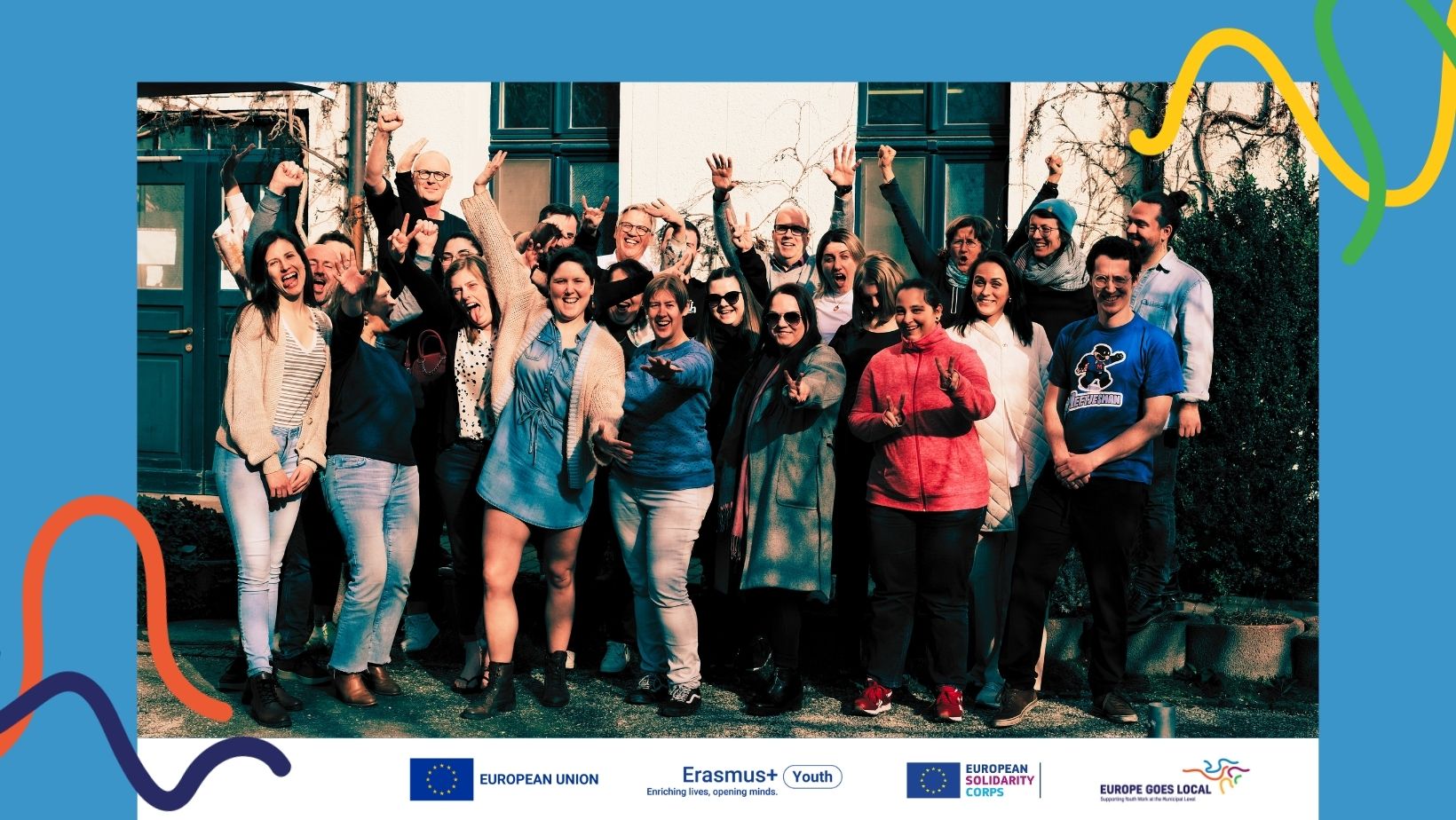
Youth work makes a real difference in young people’s lives. At the same time, youth work often seems to be a victim of unchangeable political circumstances and decisions. But who speaks up for youth work? And how can youth workers strengthen their lobbying skills?
Therefore, in recent years, several training courses on lobbying for youth work have been offered at the European level as well as in individual EU Member States.
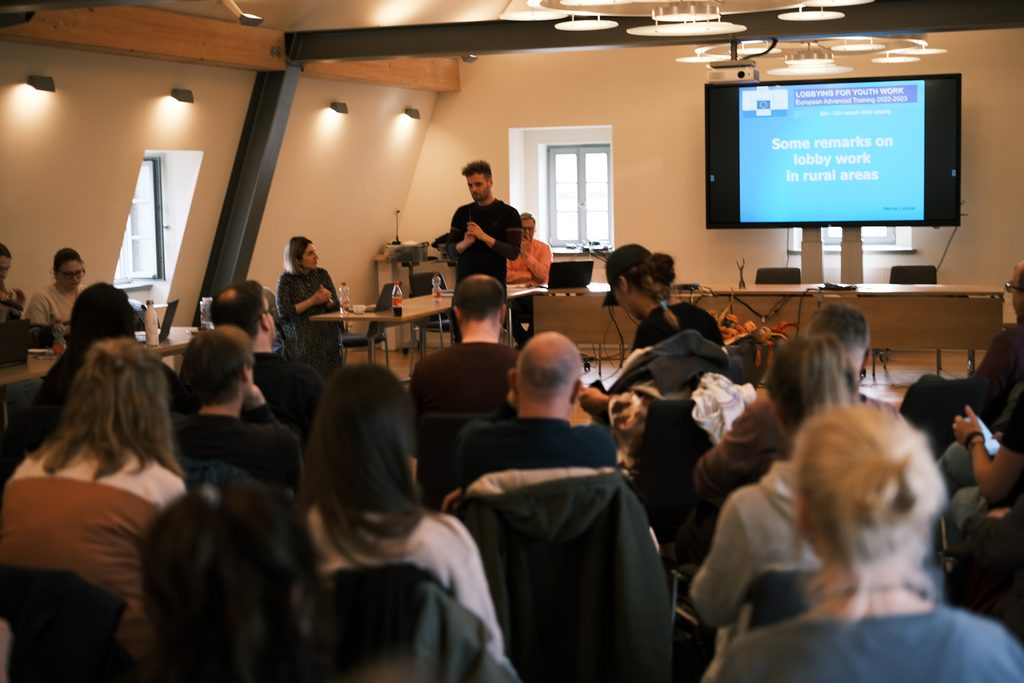
The European Long-Term Training Courses were inspired by and carried out within the framework of “Europe goes local”. These training courses have equipped the participants with the strategies, networks and communication skills needed to advocate for youth work and youth-friendly policies.
A European story with local roots
The roots of Lobbying for Youth Work lie in Germany, where the concept was first developed as a national training course. In 2019, JUGEND für Europa initiated the first international training course within Europe goes Local. A second international trajectory followed, coordinated by JINT, which further developed the methodology and expanded the network of practitioners. Both editions focused very much on the local level and invited mostly local youth work practitioners. Inspired by these experiences, national trajectories emerged in several countries.
Change starts where young people live
Many of the decisions that shape young people’s lives are made locally. Whether it concerns public space, participation, wellbeing or inclusion, municipalities play an important role in creating the conditions in which young people grow up and thrive. That’s the reason why the lobbying for youth work training courses were embedded within Europe goes local.
Yet youth work often competes with other policy priorities. That is precisely where Lobbying for Youth Work comes in. As Elmo from De Ambrassade summarised:
“Every youth worker should consciously engage in lobbying. It should not be reserved for policy specialists.”
More than a training
Over the past years, Lobbying for Youth Work has grown beyond a training methodology. Through the different trajectories, participants, trainers and experts have collectively explored what it takes to strengthen the position of youth work in policy-making processes.
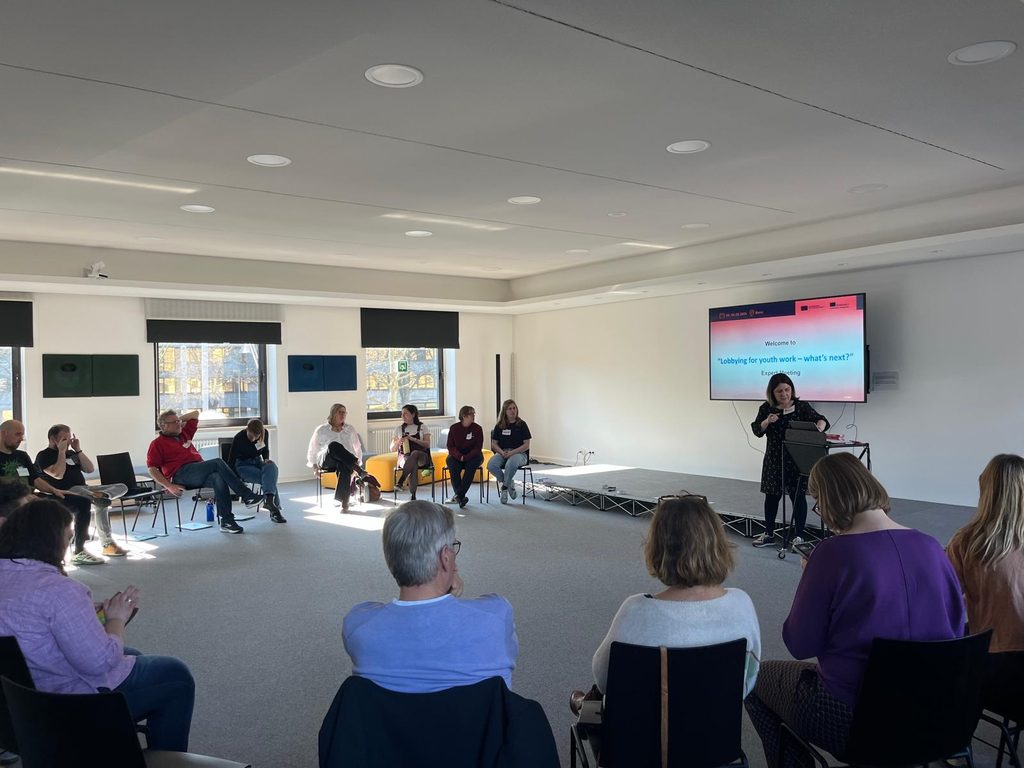
In March 2026, former participants, trainers and experts gathered in Bonn, Germany, for an international harvesting event. Together, they reflected on seven years of experience and explored how the concept could continue to grow in the future.
The discussions resulted in a number of clear recommendations.
These recommendations are brought together in the Lobbying for Youth Work Position Paper.
Looking ahead
The story of Lobbying for Youth Work is still being written.
While the initiative has focused primarily on local youth work and municipalities, its lessons reach much further. Across Europe, youth workers, youth officers and youth organisations are increasingly recognizing lobbying as a core competence for creating impact.
The next challenge is clear: to continue strengthening local youth-friendly ecosystems while embedding lobbying more firmly within the youth work sector at local, national and European level.
As Pieter-Jan from Meetjesman noted:
“We need to keep looking critically at ourselves as a sector, while also thinking about how to make lobbying for youth work and youth policy attractive to as many youth work professionals as possible.”
What started as a Europe Goes Local initiative has become a broader invitation to the youth work sector: not only to respond to decisions, but to help shape them
Lobbying for Youth Work: What’s next? – Download the position paper developed by Geert Boutsen, Nele Leeten, and Claudius Siebel.

Check out our related past articles:
Engaging in Lobbying – Positionoiong Youth Work – by Jugend fur Europa
Lobbying for Youth Work – interview with Geert Boutsen